Kumano Gongen
熊野三所権現
Deities of rebirth
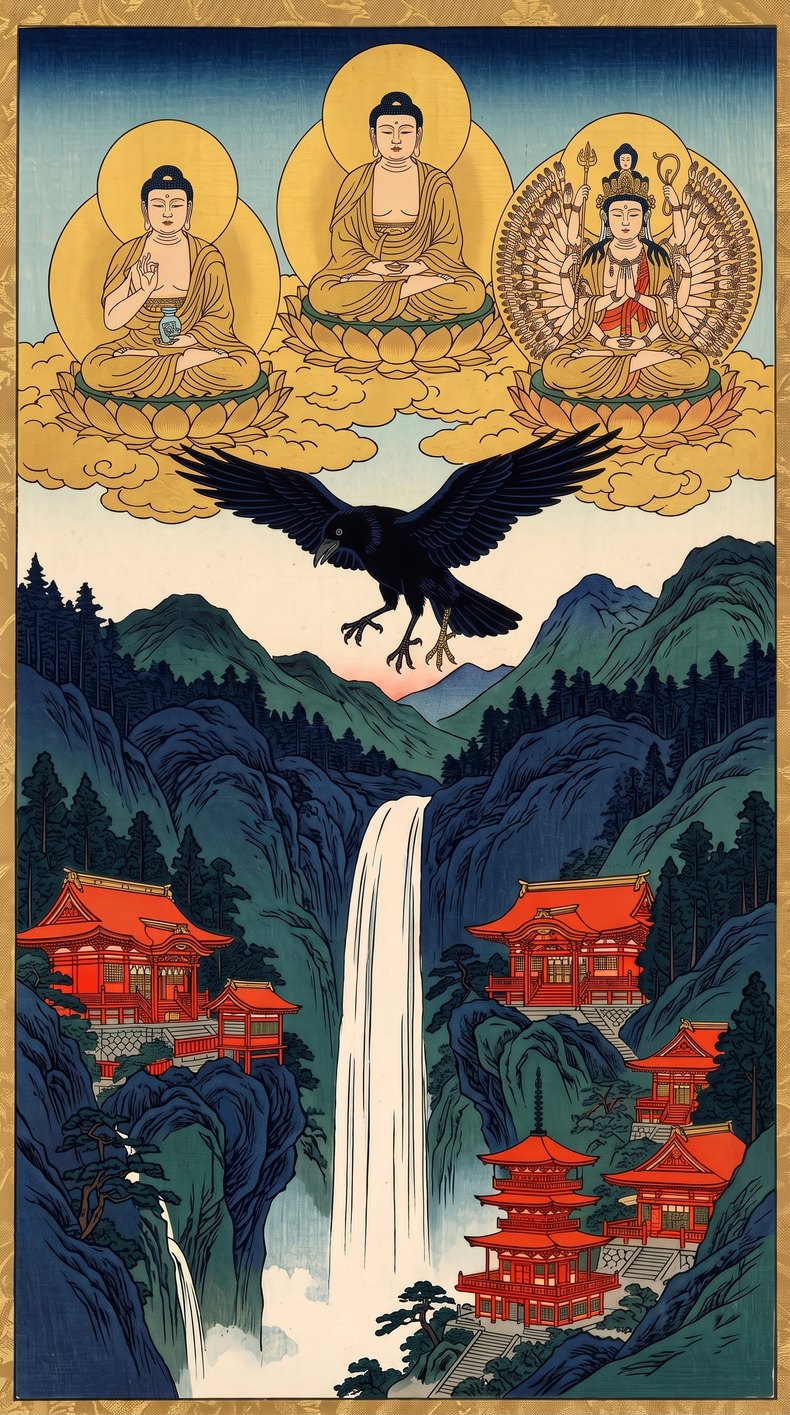
Three deities enshrined at the Kumano Sanzan shrines. In medieval times, people of all social classes traveled to Kumano, a place believed to offer rebirth.
About
Kumano Gongen is the collective name for three deities: Ketsumimiko at Kumano Hongu Taisha, Kumano Hayatama at Kumano Hayatama Taisha, and Kumano Fusumi at Kumano Nachi Taisha. Kumano has a long history of combining Shinto and Buddhist beliefs. The three deities were regarded as manifestations of Amida Nyorai (Amitabha Buddha), Yakushi Nyorai (Medicine Buddha), and Senju Kannon (Thousand-Armed Kannon), respectively. More than 3,000 Kumano shrines have been established throughout Japan.
The story
Since ancient times, Kumano has been regarded as both an entrance to the land of the dead and a place of rebirth. Crossing its steep mountains to worship was compared to dying and being born again. From the late Heian period onward, people of every social class traveled there, from retired emperors to ordinary people. The crowds were described as the 'ants' pilgrimage to Kumano.' Women were not excluded because of ideas about ritual impurity. The pilgrimage routes can still be walked today as the Kumano Kodo. They are registered as a UNESCO World Heritage Site.
What people pray for
Kumano Gongen is associated with rebirth and new beginnings. Many people visit during important turning points in their lives. It has long been said that visiting all three Kumano shrines purifies the past, present, and future.
How to recognize their shrines
The divine messenger is Yatagarasu, a three-legged crow. The emblem of the Japan Football Association also comes from this crow. The shrine buildings feature the Kumano-zukuri style, with roofs made of cypress bark.
Also known as
Ketsumimiko Okami / Kumano Hayatama Okami / Kumano Fusumi Okami


